Be a Member of this BLOG

Search This Blog

Nov 22, 2012

Choronology


BEFORE CHRIST
1900        Construction of Stonehenge begins around this time
12-1300   Invasion of England by Celtic-speaking peoples
55-54       Julius Caesar’s expeditions reach England
THE OLD ENGLISH PERIOD
5-40        Reign of Cunobelinus (Cymbeline)
43           Roman conquest of England
122          Romans begin construction of Hadrian’s Wall to defend Britain against invasions from the north
313          Christianity introduced in England
350          Invasion of Angles, Saxons, and Jutes begins
429          Withdrawal of Roman legions from England is complete by this date or earlier
5??           Arthur defeated and killed in Civil War
597          St. Augustine re-establishes the Roman Church in England
663          Roman Christianity is endorsed by the Synod of Whitby (instead of Celtic Christianity)
731          Bede, An Ecclesiastical History of the English People ["Caedmon's Hymn"]
757          Offa, King of Mercia, begins his reign
802          Egbert, King of Wessex
856-75     Viking raids at their peak
871-99     King Alfred the Great of Wessex (defeater of the Danes)
900-950   An English state is established
978           Ethelred the Unready reigns; Danish invasions resume
____         The Dream of the Rood
                 Beowulf
                 The Battle of Maldon
                 The Wanderer
1016         Canut of Denmark rules England, Denmark, and Norway
1042         King Edward the Confessor (Wessex line)
1066         William the Conqueror (NORMANDY) defeats Harold II in The Battle of Hastings
1086         The Doomsday Book
1087         William II (third son of William) King
1100         William II shot in ambush. Henry I (youngest son of William) King
1135         Stephen (BLOIS–grandson of William I by daughter) competes with Empress Matilda for throne (“The Anarchy”)
1154         Henry II (PLANTAGENT– grandson of Henry I by daughter)
1170         Thomas Becket, Archbishop of Canterbury,  murdered in the cathedral
                 Oxford University founded at about this time
1169         Conquest of Ireland is begun
1189         Richard I, Coeur de Lion (son of Henry II) King
1190         Richard goes on Crusade, to return in 1194
1199         John Lackland (son of Henry II, brother of Richard) King

THE MIDDLE ENGLISH PERIOD
1210     Cambridge University founded at about this time
1215     Magna Carta
1216     Henry III (son of John) King (builder of Westminster Abbey)
1272     Edward I, Longshanks, Prince of Wales King (son of Henry III)
1284     Conquest of Wales
1290     Jews Expelled from England
1307     Edward II (son of Edward I) King; deposed and murdered in 1327 by Queen Isabella and Mortimer
1327     Edward III of Windsor (son of Edward II, grandson of John) King
1337     100 Years War Begins (Edward III’s claim to crown of France)
1346     Battle of Crecy, England defeats France’s feudal armies
1348    The Black Death Strikes England
1362    William Langland, The Vision of Piers Plowman 
            English officially replaces French as the language of the court
1375     Sir Gawain and the Green Knight
1377     Richard II (grandson of Edward III) King
1381    Peasant’s Revolt
1386     ChaucerCanterbury Tales
1393     Julian of Norwich, Book of Showings, contains her visions from God
____    The Second Shepherds’ Play
1399     Henry IV (LANCASTER–grandson of Edward III) King
1400     Welsh revolt under Owen Glendower
1403     Henry Percy (Shakespeare’s Hotspur) defeated at Shrewsbury
1413     Henry V, Prince Hal (son of Henry IV) King
1415     Battle of Agincourt; five years later, Henry recognised as heir to French crown
1422     Henry VI (Son of Henry V)
1431    Joan of Arc is burned
1432     Margery Kempe, The Book of Margery Kempe
1453     Hundred Years War ends with conquest of of Guienne by the French
1455     The War of The Roses Begins–Lancaster vs. York
1461     Edward IV (YORK–Great-great-grandson Edward III) King, temporarily deposes Henry VI
1469     Sir Thomas Malory (Morte D’arthur)
1471     Henry VI murdered
1483     Edward V (son of Edward IV) King and murdered
             Richard III, Crookback King
1485     Richard III dies in battle at Bosworth–The War of the Roses ends
             Henry VII King (TUDOR– married Elizabeth, daughter of Edward IV)
____     Everyman

THE 16th CENTURY
1509     Henry VIII (son of Henry VII) King
1516     Sir Thomas Moore’s Utopia 
            (also wrote History of King Richard III; he was killed for his Catholic faith)
1517     Reformation Begins
1533     Thomas Cranmer, Archbishop of Canterburry, validates Henry’s marriage to Anne Boleyn
1534-5  Papal authority abolished in England; Moore executed; Act of Supremacy
____   John Skelton, “Colin Clout”
1534     Henry VIII acknowledged “supreme Head on Earth” by Anglican Church
1537    Howard, Earl of Surrey (“My Friend,  the Things That Do Attain”) imprisoned
1538   Great English Bible
1541    Wyatt (“Whoso List to Hunt”) imprisoned
1547     Edward VI  King
1553     Mary I, “Bloody Mary” Queen (daughter of Henry VIII)
             Attempts to restore Catholicism, repeals anti-papal legislation
1554    Lady Jane Grey executed
1558     Mary I dies childless. Elizabeth I (daughter Henry VIII) Queen
1559    Act of Supremacy restores Anglican Church
1560    Anglo-Scottish Alliance in Treaty of Edninburgh
1561     Mary Queen of Scotts (Catholic) begins rule in Scotland
             Sir Thomas Hoby, translation of The Courtier
1563    The Thirty-Nine Articles of the Anglican Church
1564    Shakespeare is born
1567     Mary Queen of Scots imprisoned in England (driven from throne by Calvinists)
1578     John LylyEuphues: The Anatomy of Wit
1587     Elizabeth beheads Mary Queen of Scots for Catholic plots
1588     Defeat of the Spanish Armada
1590     Edmund SpencerThe Faerie Queen
1591     Sir Philip Sidney, “Astrophil and Stella”
1592     Christopher MarloweDr. Faustus and Hero and Leander 
             Thomas NashePierce Penniless, His Supplication to the Devil
1593   Richard Hooker defends existing practices in Of the Laws of Ecclesiastical Polity
1598   Revolt in Ireland
1601   Essex executed for rebellion
           Thomas Campion (“My Sweetest Lesbia.” “Rose-Cheeked Laura,” “Fain Would I Wed”)
           Shakespeare begins Hamlet about this time

 EARLY 17th CENTURY
1603     Elizabeth dies. James I (STUART), James VI of  Scotland King
1605     The Gunpowder Plot
             Francis Bacon writes The Advancement of Learning (In 1620 Novum Organum)
1606     Ben Jonson’s play Volpone published
1611     King James Bible Published
1615    John Donne (“The Ecstasy”, “The Canonization”, etc.) becomes Anglican priest
1616     Shakespeare dies
1618     30 Years War begins in Europe
1620     Pilgrims depart for New England
1600′s   John Webster publishes his play The Duchess of Malf
1625     Charles I (son of James I) King
1629     Charles I dissolves parliament
1633     George HerbertThe Temple (“Jordan”, “The Pulley”, “Love”, etc.)
1638     Scottish revolt over imposition of Laudian liturgy
1640     Charles I, in need of tax money for war, convenes “The Long Parliament”
             Izaak Walton, The Life of Donne
             Thomas Carew, “A Rapture”
1641    Irish revolt
1642    English Civil War              
            Theaters closed
            Sir John Denham, “Cooper’s Hill”
1645     Edmund Waller, “Go, Lovely Rose!”
1646     Richard Crashaw, “Steps to the Temple”, “The Flaming Heart”
             Sir John Suckling, “Loving and Beloved”
1648     30 Years War Ends
             Robert HerrickHesperides (“The Vine”) and Noble Numbers (sacred)
1649     Charles I beheaded. Council of State rules (Commonwealth/Protectorate)
             Richard Lovelace “To Althea, from Prison” and “To Lucasta, Going to the Wars”
1650     Henry Vaughn, “Silex Scintillans”
1651     Thomas Hobbes, Leviathan
1653     Oliver Cromwell, Lord Protector
____     First appearance of women on stage
___       First performance of an English opera
1656     Abraham Cowley, “Ode: Of Wit”
1658     Richard Cromwell, “Tumble-down Dick” (son of Oliver), Lord Protector
____     Andrew Marvell, “To His Coy Mistress”
             Samuel Pepys (diary later published in 1825)

THE RESTORATION AND 18th CENTURY
1660        The Restoration (Charles II)
1662         Royal Society of London incorporated to promote arts and sciences
1663         Samuel Butler, “Hudibras”
                 John Milton, Paradise Lost
1665         The Plague breaks out
1666         The Great Fire of London
1673         Test Act requires office holders to accept rites of the Anglican Church
1675         John Bunyan writes Pilgrim’s Progress during second imprisonment
                 Christopher Wren is chosen to design St. Paul’s
1676         Sir George Etherege, The Man of Mode
1677         John Dryden, All For Love
1678         Titus Oates exposes the details of a fictious Popish Plot to kill the King
1680         Exclusion Bill Crisis
1681         John Dryden, “Absalom and Achitophel”
1682         Thomas Otway, Venice Preserv’d
1685         James II King
1687         Isaac Newton, Principles of Mathematics
1688         The Glorious Revolution
1689        Bill of Rights passed
1690        John LockeEssay Concerning Human Understanding
1696        Sir John Vanbrugh, The Relapse
1700        William Congreve, The Way of the World
1701        Act of Settlement stipulates that Anne, Protestant daughter of James II, is to succeed William
1702        Anne (second daughter of James II) Queen
1704         The Duke of Marlborough’s victory at Blenheim against the French
1707         George Farquhar, The Beaux’ Stragem 
                 Act of Union (Scotland + England = “Great Britain”)
1709-11    Addison (paper Tattler)
1711         Alexander Pope’s “An Essay on Criticism” (later wrote “An Essay on Man”)
1711-2      Steele’s paper Spectator
1713         Treaty of Utrecht ends the war with Louis XIV
1714         George I (HANOVER–son of granddaughter of James I) King
                Alexander Pope, “Rape of the Lock”
1715         First Jacobite Rebellion:
                “The Old Pretender” (son of James II) attempts to restore Stuart rule
1719         Daniel Defoe’s Robinson Crusoe is published – the first novel in english
1726         Jonathan Swift, Gulliver’s Travels
1727         George II
1728         John Gay, The Beggar’s Opera
1729         John Wesley founds Methodist Society
1730         James Thomson, “The Seasons”
1731         Henry Fielding, Tom Thumb
1739         War of Jenkin’s Ear (with Spain) begins (to 1741)
1746         Second Jacobite rebellion crushed at Culloden
                 (Bonnie Prince Charles–grandson of James II–tried to regain the throne)
                 William Collins (“Ode on the Poetical Character”)
1740 – Pamela, or Virtue Rewarded is an epistolary novel by Samuel Richardson, first published in 1740. It tells the story of a maid named Pamela whose master, Mr. B, makes unwanted advances towards her. She rejects him continually, and her virtue is eventually rewarded when he shows his sincerity by proposing an equitable marriage to her. In the second part of the novel, Pamela attempts to accommodate herself to upper-class society and to build a successful relationship with him. The story was widely mocked at the time for its perceived licentiousness
1741 - An Apology for the Life of Mrs. Shamela Andrews, or Shamela, as it is more commonly known, is a satirical novel written by Henry Fielding and first published under the name of Mr. Conny Keyber. (Fielding never owned to writing the work but it is widely considered to be his.) It is a direct attack on the then-popular novel Pamela by Fielding’s contemporary and rival, Samuel Richardson and is composed, like Pamela, in epistolary form.
1751         Thomas Gray, “Elegy Written in a Country Churchyard”
                 Henry FieldingAmelia
1755         Samuel Johnson finishes his Dictionary (James Boswell later writes his biography)
1756         The Seven Years’ War (French and Indian Wars) begins
1759         Wolfe captures Quebec
1760         George III (grandson of George II) King
1761         William Pitt resigns as Prime Minister when his colleagues refuse to fight Spain
1763         Treaty of Paris ends the Seven Years War

The First Gothic Novel…

1764 – Horace Walpole’s Gothic novelThe Castle of Otranto 
1768         Cook’s voyage to Australia
1770         Oliver Goldsmith, “The Deserted Village”
1771         Richard Cumberland, The West Indian
1773         Oliver Goldsmith, She Stoops to Conquer
1775         War for American Independence Begins
                 Jane Austen is born
1776         Adam Smith, The Wealth of Nations
                 Gibbon, Decline and Fall of the Roman Empire (first volume)
1777         Richard Brinsley Sheridan, The School for Scandal
1783         William Pitt (younger) prime minister
1785         William Cowper, “The Task”
1790 -  A Sicilian Romance – Ann Radcliffe
1791 - The Romance of the Forest - Ann Radcliffe
1794         William Godwin’s “Things as They Are or The Adventures of Caleb Williams” – the first thriller – and a real page turner
794 –  The Mysteries of Udolpho – Ann Radcliffe
1796 – The Italian – Ann Radcliffe
THE ROMANTIC PERIOD
1786     Robert Burns: Poems, Chiefly in the Scotish Dialect
1789     *The French Revolution begins*
1790     Songs of Innocence and Experience by William Blake
1792     Mary WollstonecraftA Vindication of the Rights of Woman
1793     Bastille stormed. Louis XVI executed. Reign of Terror under Robespierre.
             England wars with France; the Napoleonic Wars begin
1798     Wordsworth and Coleridge publish Lyrical Ballads
1801     Great Britain and Ireland Unite as the “United Kingdom
1804     Napoleon crowned emperor
1805     Battle of Trafalgar
1811     The Regency
             Prince of Wales acts as regent for George III, who has been declared incurably insane
1812     War with the United States
1813     Jane AustenPride and Prejudice
1815     Napoleon defeated at Waterloo
1817     William Hazlitt, critic, On Gusto
             Jane Austen dies
1818     Lord Byron begins “Don Juan”
             Mary (Wollstonecraft) ShellyFrankenstein
1819     John Keats “Ode to a Nightingale”
             Sir Walter ScottIvanhoe
             Peterloo Massacre
1820     George IV (son of George III) King
             Thomas Love Peackockcritic The Four Ages of Poetry 
             Percy Shelley “To a Skylark” and “Adonais”
1821     Thomas De Quincey Confessions of an English Opium Eater
1823     Charles LambChrist Hospital Five and Thirty Years Ago
1829     Catholic Emancipation Act
1830     William IV (3rd son of George III) King
             Thomas Moore Life of Byron

THE VICTORIAN AGE / 19th CENTURY
1832     First Reform Bill
1834     Poor Law Reform Act
1837     Victoria (daughter of 4th son of George III) Queen
             Thomas Carlyle publishes The French Revolution
1841     Peel Prime Minister
1845     Great Potato Famine
1846     Corn Laws repealed (i.e the tariff on grains)
1847     Charlotte BronteJane Eyre 
             Anne Bronte, Agnes Gray
             William Thackery, Vanity Fair
1848     Emily Bronte Wuthering Heights
             Macaulay, History of England
1850     Tennyson publishes “In Memoriam” and succeeds Wordsworth as poet  laureate
1851     Matthew Arnold, “Dover Beach”
             Charles Dickens, Bleak House
1854    Crimean War
1855     Robert Browning“Men and Women”
1856     John Ruskin ,”On the Pathetic Fallacy”
1857     Elizabeth Barret Browning, “Aurora Leigh”
             Anthony Trollope, Barchester Towers
             Indian Mutiny
1858     William Morris “The Defense of Guenevere”
1859     Charles Darwin, Origin of Species 
             Edward Fitzgerald “The Rubaiyat of Omar Khayyam”
            George Eliot, Adam Bede
1861    John Stuart Mill, Representative Government
1865     Lewis CarrollAlice in Wonderland
1866     Algernon Swinburne, “The Triumph of Time” (“Poems and Ballads”)
1867     Second Reform Act
1868     Walter Pater, Aesthetic Poetry             Gladstone Prime Minister
1870-1  Franco Prussian War
1871     George EliotMiddlemarch
             Religious tests at Universities Abolished
1872     Christina Rossetti, “Goblin Market”
____     Thomas Henry Huxley gives his “Science and Culture” lectures
             Dante Gabriel Rosetti, “The House of Life”
1874    Disraeli Prime Minsiter
            Thomas Harding, Far From the Madding Crowd
1875     William Ernest Henley, “In Hospital–Waiting”
             Gilbert and Sullivan, Trial by Jury
             Britain acquires Suez Canal
1877     Gerard Manley Hopkins“God’s Grandeur”
             
Victoria declared Empress of India
1879     George Meredith, The Egoist
1884     Third Reform Act
1886     Salsibury Prime Minister
1888     Kipling, Plain Tales from the Hills
1891     Thomas Hardy, Tess of the D’Urbevilles

TWENTIETH CENTURY
1894     Rudyard Kipling, Jungle Books
1895     Oscar WildeThe Importance of Being Earnest
1899     Boer War
1900     Joseph Conrad, Lord Jim
1901     Edward VII (son of Victoria–SAXE-COBURG AND GOTHA)
1902     William Butler Yeats “Adam’s Curse”
             Balfour Prime Minister
1903     Henry James, The Ambassadors
1905     H.G. Wells, Kipps
1908     E.M. Forster, A Room With A View
1910     George V (2nd son of Ed VII–WINDSOR)
1913     D.H. Lawrence, Sons and Lovers 
             Vachel Lindsay, General William Booth Enters Into Heaven
1914     World War I
             Ezra Pound organizes the Imagists
1916     Lloyd George Prime Minister
1918     Gerard Manley Hopkins’s poetry published after death
             Siegfried Sassoon “Glory of Women”; Wilfred Owen “Dulce Et Decorum Est”
            Women (age 30 or over) get right to vote; universal male suffrage
1920    Partition established in Government of Ireland Act
1922     T.S. Eliot, The Wasteland 
             James Joyce, Ulyssess
1923     George Bernard Shaw, Saint Joan
1924     First Labour Government
1925     Virignia Wolf, Mrs. Dalloway             
1930     Evelyn Waugh publishes Vile Bodies
1932     Aldous Huxley, Brave New World
1933     A.E. Housman, The Name and Nature of Poetry
1934     Robert Graves, I, Claudius              
1936     Edward VIII (son of Geroge V) King then abdicates
             George VI (2nd son of George V) King
             Spanish Civil War Begins
             Keynes, General Theory of Employment, Interest and Money
1937     W.H. Auden, “Spain, 1937″
             Louis Macneice, “Carrickfergus”
            Chamberlain Prime Minister
1938     Graham Greene Brighton Rock 
             C.S. LewisOut of The Silent Planet
1939     World War II
1940     Churchill Prime Minister
1945      George Orwell, Animal Farm 
              Henry Reed“Naming of Parts”
1947      Independence granted to India and Pakistan
1952     Elizabeth II (daughter of George VI);    Samuel Beckett, Waiting for Godot
1954     William Golding, The Lord of the Flies
1955     Philip Larkin, “Church Going”
1956     Suez Crisis
1957     Stevie Smith, “Not Waving But Drowning” ;  Ghana obtains independence
1960     Ted Hughes, “Relic”
1979     Thatcher Prime Minsiter

Nov 17, 2012

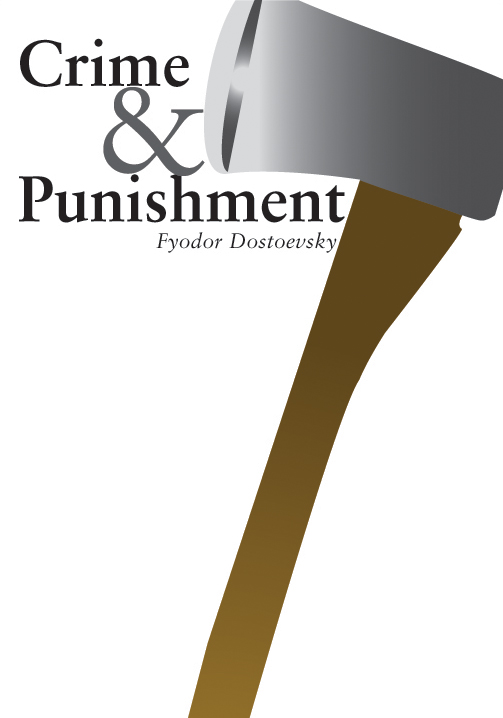
Crime and Punishment: Dostoevsky

The candle-end had long since burned low in the twisted candlestick, dimly lighting the poverty-stricken room and the murderer and the harlot who had come together so strangely to read the eternal book.

Dostoevsky’s dark tale of murder and guilt has assumed for many readers the status of a religious parable, describing how a sinner finds redemption through faith in Christ. Crime and Punishment is the first of Dostoevsky’s novels to have an explicitly Christian message. However, if we place its Christian message within the context of the debates happening in the Russia of the time, in the context of Dostoevsky’s position in those debates, and in the context of Dostoevsky’s own Christianity, the book reveals itself as far more complex in its attitude to Christianity than a mere parable.

Dostoevsky’s Christianity
The first mention of Christianity in Dostoevsky’s writing comes in a famous letter written in 1854 to Fonvizina, a wife of one of the Decembrists. The letter was written when Dostoevsky had been just newly released from his four years in prison. The letter is a key document for understanding the development and style of Dostoevsky’s Christianity:

I have formulated my creed, wherein all is clear and holy to me. This creed is extremely simple; here is it is: I believe that there is nothing lovelier, deeper and more sympathetic, more rational, more manly and more perfect than the Saviour. I say to myself with jealous love that not only is there no one else like him, but that there could be no one. I would even say more. If anyone could prove to me that Christ is outside the truth, and if the truth did really exclude Christ, I should prefer to stay with Christ, and not with truth.

However, just before this statement of his creed, Dostoevsky writes:

I want to say this to you about myself, that I am a child of this age, a child of unfaith and scepticism, and probably (indeed I know it) shall remain so to the end of my life. How dreadfully it has tormented me (and torments me even now) this longing for faith which is all the stronger for the proofs I have against it….

Faith for Dostoevsky –at this time- was only intermittent, and the search for these intermittent moments of faith was tormenting, because they were against the grain and did not come easily. They were borne of suffering:

In such moments one does, like dry grass, thirst after faith, and that one finds it in the end solely and simply because one sees the truth more clearly when one is unhappy.

So we see a highly ambivalent attitude. On the one hand, rational scepticism, even atheism, and on the other a burning love for the person of Christ as a Saviour borne out of the need for solace in great suffering. This ambivalence is reflected all the way through Crime and Punishment. Christianity makes its appearance in the novel in eight different episodes. Each episode reflects the same tension between faith and unfaith as revealed in the letter to Fonvizina.

Christianity in Crime and Punishment I
First, is Marmeladov’s outburst in the pub, when he jumps to his feet in drunken ecstasy and begins to prosyletize, a garbled message covering the themes of affliction, mercy and forgiveness. There is a stunned silence, then raucous laughter and curses from the other drinkers: “There spoke the great intellect!” “What a load of rubbish!” “There’s a civil servant for you”, and so on. The second appearance is in Raskolnikov’s mother’s letter, in which she reveals herself as a devoutly religious woman. Her letter is full of the standard phrases of religiosity, and an admonishment to her son to pray. I fear that you too have become affected by the fashionable modern unbelief. If that is so, I will pray for you. Third, Raskolnikov on his way to commit the murder vacillates between doing it and not doing it. He prays to God to give him strength: “Lord, show me the way, that I may renounce this accursed fantasy of mine.". Later, he remembers, with superstitious awe, the moment as a conflation of circumstances which leads him irrevocably to the murder – the hand of God?

The fourth episode is the scene where Raskolnikov and Sonya read the gospel. Sonya is the first to broach the subject of God in their conversation, and Raskolnikov meets it with atheistic cruelty. “Perhaps God does not exist”, answered Raskolnikov with malicious enjoyment. He decides that it is her faith that sustains Sonya through her suffering. It is Raskolnikov who first suggests that Sonya read to him from the gospel, and he himself chooses the story of the raising of Lazarus. This choice is highly significant. First, it stands as sign for Raskolnikov’s remorse and regret at killing the innocent Lizaveta, whom he had not planned or intended to kill. He wishes she could walk again. Second, Lazarus’s return from the dead signifies Raskolnikov’s longing to return to human society. He has been existing in a kind of self-imposed isolation ever since the murder, separate from the rest of humanity, crushed by his loneliness, incapable of responding to the kindness shown to him by those who love him. Thirdly, the raising of Lazarus stands for the rebirth of Russia, or more specifically, for the rebirth of the Russian intelligentsia. Let’s pause here and look at this aspect of the symbol of Lazarus in more detail.

Interlude: Crime and Punishment and the debates of the 1860s
During the early 1860s Dostoevsky was engaged in a polemic between the Slavophile conservatives on the one hand, and the radical, rationalistic, nihilism of the Westernisers on the other. He was trying to steer a third way between them. He had spent the early part of the decade arguing for ‘a return to the soil’, an ambiguous term that covered a range of meanings, from the urgent call to land reform to a kind of mystical nationalism based on the values of the peasant and peasant religion, a call to unity for Russians of all classes and all political persuasions. As the decade wore on, he moved steadily to the right of the political spectrum, and to a belief that only the traditional values of Russian Orthodoxy could save Russia. This transition can be mapped out in the three published works of the early 1860s: Winter Notes on Summer Impression (1862), Notes from Underground (1864), and Crime and Punishment (1866).

Dostoevsky’s original intention for Notes from Underground, the novel immediately prior to Crime and Punishment, was to introduce Christianity into it, as an antidote to the poisonous dialectic between the underground man’s nihilism and the Westernisers’ rationalism, both of which Dostoevsky saw as dangerous for the Russian soul. However, his design was scuppered by the censor, who removed large chunks of part 1 chapter 10 in which Dostoevsky had hoped to cause the reader to deduce the need for faith and Christ, as he put it in a letter to his brother. These excisions on the part of the censor were never corrected by Dostoevsky in subsequent editions of his works, and this leaves Notes From Underground the last major work in the early part of Dostoevsky’s career where Christianity is absent.

In Crime and Punishment written two years later, Dostoevsky was much more upfront in his aim. The need for faith and Christ is not to be ‘deduced’, but is to be clearly understood, indeed is asserted at the levels of ideas, psychology, and plot. Crime and Punishment includes many of the same contemporary debates as Notes From Underground, and shares many of its same images and concerns.

➢ The debate about socialism, symbolised by the crystal palace, an image that appears also in Winter Notes, and in Notes from Underground. Here, it is (mockingly?) transformed into the name of the pub where Raskolnikov taunts the policeman. In a key scene where Raskolnikov, his friend Razhumikin, and the Examining Magistrate Porfiry discuss various topics, Razhumikin summarizes the socialists’ views on crime: crime is a protest against the unnatural structure of society… ‘the deleterious effect of the environment’. He criticises their hostility to history and their denial of nature: they do not like the living process of life, they have no use for the living soul. Dostoevsky, through the actions of the murderer Raskolnikov, and through the mouth of Razhumikin, is criticising the socialism of Chernyshevsky, and at the same time repudiating his own youthful enthusiasm for Western socialism.

➢ The motivations for Raskolnikov’s murder provide the occasion for many of the same arguments against the rational utilitarianism of the Westernisers that appear in Notes from Underground. Raskolnikov is a man motivated by a theory, largely of his own devising, but clearly an extension of the Westernisers notions of rational self- interest and utilitarianism. His theory consists of three elements. First: that a great man stands outside social norms, that he should not hesitate to grasp his destiny, even if it means killing someone who might stand in his way. Second: the greater good the great man will eventually accomplish will outweigh the lesser evils committed along the way. Third: that humanity is divided into two groups, those who are useful, and those who are not. From the first group, come the great men, while the second group provides the disposable and unimportant raw material on which great men may work. In the same scene, Porfiry, with ironically exaggerated politeness, raises the following objections to this theory: how do you distinguish the extraordinary people from the ordinary? Do signs and portents appear when they are born? I mean to say… couldn’t there be, for example, some special clothing, couldn’t they carry some kind of brand or something? Another objection Porfiry raises is, of course, that a person from the second group might mistakenly imagine himself to be a person from the first group and use this delusion as a justification for murder, which is exactly Raskolnikov’s story. (The cat and mouse games the all-knowing Porfiry plays with Raskolnikov in this scene is one of the great highpoints of suspense in the novel). Dostoevsky is keen to show in this debate the spiritual paucity and danger of such rational theories, and what they might mean if implemented.

➢ The planning and implementation of the murder allows Dostoevsky to examine the relationship between free will and chance, also one of the contemporary issues raised in Notes from Underground. In spite of his rehearsal and detailed planning, Raskolnikov makes several errors during the murder, and has to deal with several chance happenings – not least the sudden and unexpected appearance of Lizaveta. These are designed to show that the ‘ineluctable’ laws of nature are undone by the presence of both human error (irrationality) and coincidence. The novel abounds with coincidences. Raskolnikov’s encounter with Svidrigaliov just when he is thinking about him, the coincidental fact that most of the visitors to St. Petersburg are lodging in the same building. The city throws up other strange coincidences, such as the suicidal woman, and the mysterious apparition of the old man who hisses Murderer! at Raskolnikov in the street, one of the most truly terrifying episodes in 19th century Russian literature. Of course, these coincidences are part and parcel of any 19th century plot, but they are also perhaps traces of Gogolian magic.

It is the Examining Magistrate who, again, voices Dostoevsky’s concern that an exclusive reliance on Western rationalism may lead to the kind of actions that Raskolnikov commits.

This is an obscure and fantastic case, a contemporary case, something that could only happen in our day, when the heart of man has grown so troubled, when people quote sayings about ‘blood refreshing’; when the whole of life is dedicated to comfort. There are bookish dreams here, a heart troubled by theory…

On the level of action and ideas, then, the novel engages with the debates of the 1860s and acts as vehicle for Dostoevsky’s criticism of them, showing their ultimate unworkability as solutions for Russia, and for humanity in general. Now, let’s return to how the novel puts forward Christianity- Christ’s interference in the spiritual fate of Lazarus- as a solution to these various contemporary philosophical problems aired in the text.

Christianity in Crime and Punishment II
The next key appearance of Christianity in the novel is the scene where Raskolnikov confesses his crime to Sonya, and explains his motivation to her. The rational purity and logical coherence of his theory melts away like sand in the wind in the face of Sonya’s appalled, human reaction to it –“A human being a louse?” leaving Raskolnikov rather shamefaced at the fact that he had not previously seen its nullity. What strikes Sonya about it is the fact that it causes Raskolnikov himself suffering. When Raskolnikov asks for her advice her reaction is very significant. ‘Go at once this instant, stand at the crossroads, first bow down and kiss the earth you have desecrated, then bow to the whole world, to the four corners of the earth and say aloud to all the world: “I have done murder.”’ In other words, she enjoins him to reconnect with the soil of Russia, the soil from which his theories had divorced him, and to re-establish his sense of brotherhood with his fellow man. She gives him her cross to wear, an act laden with meanings symbolic of brotherhood for a Russian Orthodox (Prince Myshkin and Rogozhin also exchange crosses in the name of brotherhood in The Idiot), but Raskolnikov refuses it: he is not ready for it yet. “Better give it to me afterwards.” “Yes, yes, that will be better, much better. When you accept your suffering, you shall put it on.” Like Dostoevsky himself, Raskolnikov is slowly moving away from Western rationalism towards faith through an acceptance of suffering.

Earlier in the novel, the death of Katerina Ivanovna has provided an example through contrast of someone who rejects Christianity as a solace for suffering. On her deathbed, she rejects the suggestion of a priest. “I don’t want him. I have no sins. God ought to pardon me without the priest’s help. He knows how much I have suffered. And if he doesn’t pardon me, so much the worse!...Enough. The time has come. Goodbye poor wretch! This poor beast has been driven to death! I am finished”, she cried full of despair and hatred and her head fell heavily back on the pillow. By rejecting Christianity and by refusing to accept her own suffering in the way that Sonya has accepted hers, Katerina Ivanovna dies in anger, bitterness and hatred, a fate that awaits Raskolnikov.

The seventh appearance of Christianity in the novel is in the episode of the house painter who steps forward and ‘confesses’ to the crime. This painter is an Old Believer and belongs to one of the obscure fundamentalist sects that Russian Orthodoxy is full of, and has been instructed by his spiritual father to take on the burden of this crime that he has not committed, to undergo punishment for it so as to learn the meaning of suffering, and thereby come closer to God. Again, it is the Examining Magistrate who explains the significance of this to Raskolnikov (and us): “Do you know what some of these people mean by ‘suffering’? It is not suffering for somebody’s sake, but simply ‘suffering is necessary’ – the acceptance of suffering that means, and if it is at the hands of the authorities, so much the better.” Now, the Russian word for such an Old Believer is raskolniki. Through example and through the name of his main character, Dostoevsky makes the meaning of Christianity in the novel clear.

Finally, in prison, Raskolnikov is haunted by the persistent remnants of his rationalist fantasy. It distressed Raskolnikov that this ridiculous fantasy (is this ‘ridiculous’ Dostoevsky’s or Raskolnikov’s?) lingered so painfully and sadly in his memory. Sonya, who has voluntarily joined him in his exile, provides his final and most powerful example of someone who has accepted suffering, both her own and another’s, and found faith. Couldn’t her beliefs become my beliefs now? The closing paragraph of the novel makes it clear that Raskolnikov will accept Christianity, and by doing so show how, for all Russian intellectuals, Christianity will heal and atone for the damage done by an over-reliance on Western rationalism.

But that is the beginning of a new story, the story of the gradual renewal of a man, of his gradual regeneration, of his slow progress from one world to another, of how he learned to know a hitherto undreamed of reality.

I like people to talk nonsense. It is man’s unique privilege, among all other organisms. By pursuing falsehood you will arrive at truth. The fact that I am in error shows that I am human. …but we can’t even produce our errors out of our own heads. You can talk the most mistaken rubbish to me, and if it’s your own, I will embrace you! It is almost better to tell your own lies than someone else’s truth. In the first case you are a man, in the second, you are no better than a parrot. Truth remains, but life can be choked up, there have been instances…

People only love God when no one else will love them.
W.H. Auden.

Nov 12, 2012

Topping Shakespeare?


Aspects of the Nobel Prize for Literature

by Professor Sture Allén
The Swedish Academy, Sweden
One of the many subjects treated vituperatively by August Strindberg in his "Addresses to the Swedish Nation", 1910, was the choice in 1901 of the first Nobel Laureate in literature, Sully Prudhomme: "Moreover, the prizewinner should have written ideally (later tampered with to make it idealistically, which is something else), but he was a materialist and had translated Lucretius." Strindberg goes on to state that the prize was awarded to Prudhomme "contrary to statutes and will".
What Strindberg is referring to is the fact that Alfred Nobel had stipulated in his will in 1895 that the Nobel prize for literature should be awarded to the person who had produced "the most outstanding work in an ideal direction". As a contemporary of Nobel, Strindberg is most likely right when he points out that the adjective idealistic is something else than the adjective idealand incompatible with the will. But he does not say what the difference is. The question of the meaning of the adjective ideal as used by Nobel - considered strange or even anomalous - has been discussed for almost a hundred years and many interpretations have been proposed. As Kjell Espmark puts it in his book The Nobel Prize in Literature. A Study of the Criteria behind the Choices, 1991: "Indeed, the history of the literature prize is in some ways a series of attempts to interpret an imprecisely worded will."
Nobel provided us with five criteria. Three of them are of a general type, valid for all the five prizes, and two are specifically designed for the literary prize. (1) "to those who ... shall have conferred the greatest benefit on mankind". This is the basic criterion, introduced in the very first sentence of the relevant paragraph in the will. (2) "during the preceding year". For obvious reasons, this is interpreted in such a way that the writer shall be alive at the moment of nomination - no room for Shakespeare - and the oeuvre shall be of current interest. (3) "no consideration whatever shall be given to the nationality of the candidates". This was a far-sighted criterion although not in keeping with the national romanticism of the late 19th century. In the last decade or so it has been possible for it to apply extensively. (4) "to the person who shall have produced ... the most outstanding work". It goes without saying that this means literary excellence. (5) "in an ideal direction". In accordance with a philological analysis, including an investigation of an amendmentin the handwritten will, this means 'in a direction towards an ideal', where the domain of the ideal is indicated by the first criterion above.
With the conservative permanent secretary Carl David af Wirsén setting the trend, the discussion in the Academy during the first Nobel years led to an idealistic reading of the will in spite of balancing contributions from Esaias Tegnér and others. This was accomplished in the spirit of the Swedish philosopher Christopher Jacob Boström, the German aesthete Friedrich Theodor Vischer, advocating ideal realism, and with them, then, Wirsén. No doubt, this is what Strindberg had noticed and turned against.
The attitude of the Academy is, of course, reflected in the history of prize citations. Almost every third prize citation in the first three decades makes use of words like idealistical(ly) in one way or another.
However, other aspects gradually came to the fore. Using available sources, like reports and correspondence, Kjell Espmark has investigated, in the book I mentioned, the criteria behind the choices. His informative study has disclosed a sequence of notions underlying the decisions in different periods, such as literary neutralism (in the days of the First World War, incidentally favouring Scandinavian writers), the great style (in the wake of Goethe), universal interest (as opposed to national or restricted in some other way), pioneers (recognizing innovative and exclusive writing), and a pragmative attitude (drawing attention to a significant but unknown writer, since none is best where there is no common measure). Thus, these are different types of internal arguments used in prize discussions over the years.
The external citations, on the other hand, form an official source of information, making up the Academy's explicit statements of motives. A study of these reveals, quite naturally, some reflections of the underlying arguments just exemplified. However, these reflections are not abundant and the picture is somewhat complex. Still, a number of recurrent arguments can be observed.
By far the most common element in the prize citations is a reference to the writer's native country or, sometimes, continent. This applies to more than one out of three citations, fromGrazia Deledda's plastic picture of life on her native island Sardinia, Anatole France's Gallic temperament and Yasunari Kawabata's great sensibility expressing the essence of the Japanese mind, to Toni Morrison's visionary force giving life to an essential aspect of American reality and Pablo Neruda's elemental force that brings alive a continent's destiny and dreams.
Especially in the early days, and in any case no later than Sholokhov's "epic of the Don" in the citation of 1965, the Academy often pointed out a single work as the main reason for the prize. The other eight books mentioned in this way are Mommsen's A History of Rome, Spitteler'sOlympian Spring, Hamsun's Growth of the Soil, Reymont's The Peasants, Thomas Mann'sBuddenbrooks, Galsworthy's The Forsyte Saga, Martin du Gard's Les Thibault, andHemingway's The Old Man and the Sea.
Only once is a laureate referred to, in the prize citations, as a pioneer: T. S. Eliot. But Pirandellois praised for his bold and ingenious revival of dramatic and scenic art, and Faulkner for his artistically unique contribution to the modern American novel. In addition, Hemingway andSartre are credited with the influence they have exerted.
Conversely, Benavente was awarded for the happy manner in which he had continued the illustrious traditions of the Spanish drama. In the same vein, Bunin, Pasternak, andSolzhenitsyn were cited for having pursued the classical/great/indispensable traditions of Russian literature.
The notion most often brought out in the last fifty years - a dozen times since Gide 1947 - is the depiction of human conditions. This is found in the lines to, e.g., Beckett, whose writing acquires its elevation in the destitution of modern man; to Singer, who brings universal human conditions to life; to Golding, whose novels illuminate the human condition in the world today, as well as to Oe, whose citation mentions his disconcerting picture of the human predicament.
Today, I think it is fair to say, there is a drift back to the will in the light of the efforts of the past. As an example, consider the prize citation for Nadine Gordimer: "who through her magnificent epic writing has - in the words of Alfred Nobel - been of very great benefit to humanity".
Due to the efficient administration of Nobel's fortune by the Nobel Foundation, our Academy has sufficient resources to engage a network of experts for reports from any cultural sphere. Those who are entitled to nominate candidates and take advantage of this prerogative form another international network. But the basis of the evaluation process is the reading done by the members of the Academy. Priorities are of course subjective, but they emerge from the group's vast experience and are tested in thorough discussions at the sessions. The members are well aware of the fact that the reputation of the Nobel Prize rests on the list of laureates.
In an essay in Scientific American, October 1994, Marvin Minsky makes the following comment: "As a species, we seem to have reached a plateau in our intellectual development. There is no sign that we are getting smarter. Was Albert Einstein a better scientist than Isaac Newton or Archimedes? Has any playwright in recent years topped William Shakespeare or Euripides?" His answer is no and it does not satisfy him. We ought to find ways to transcend our intellectual limits. This can be done, he thinks, by engineering replacement bodies and brains using nanotechnology. An option will be immortality.
At the first stage, researchers will invent electronic devices and connect them to our brains through large numbers of microscopic electrodes, thereby increasing brain capacity. In the end, however, they will find ways to replace each part of the brain. In doing so, we will be making ourselves into machines, Minsky observes. These new intelligent machines he prefers to call our "mind-children", following Hans Moravec in Mind Children: The Future of Robot and Human Intelligence,1988. Since chips are millions of times faster than brain cells, "mind-children" could be designed to think very much faster than we do. Minsky calculates that to such an entity half a minute might seem as long as one of our years and each hour as long as an entire human lifetime.
Topping Shakespeare? Well, although it is not a prerequisite you would be most welcome. As for robots, I do not expect any real competition. By the way, would a machine appreciate a prize? Let us rejoice in the wisdom of Wislawa Szymborska, the Nobel Laureate of 1996, in her "Notes from a nonexistent Himalayan expedition":
We've inherited hope -

the gift of forgetting.
You'll see how we give
birth among the ruins.

Yeti, we've got Shakespeare there.
Yeti, we play solitaire
and violin. At nightfall,
we turn lights on, Yeti.

Interpretations

The Danish literary critic Georg Brandes states in a letter that he had asked one of Nobel's friends what Nobel might have meant. The answer given was that Nobel was an anarchist and that by idealistic he meant 'adopting a polemical or critical attitude to religion, royalty, marriage, social order in general'. Of this it may first be said that a comment on idealistic is all very well, but the word at issue here is ideal. Nonetheless, it seems to suggest that Nobel took an independent stand.
Anders Österling, a former permanent secretary of the Swedish Academy, was inclined to emphasize the role played by Shelley's utopian idealism in what he called "Nobel's practical idealism". According to him, Nobel was referring to a work of a positive and humanistic tendency. He added that only the very broadest interpretation would be of any use.
The Swedish scholar Gunnar Brandell has pointed out that the contents of Nobel's library do not suggest that he was particularly influenced by Shelley. Brandell doubts whether it will ever be possible to ascertain what Nobel meant. For his part he still ventures the guess that, by linking the prize for literature to the other international prizes, Nobel specifically wished to make a contribution to international understanding through literature.
Artur Lundkvist, a former member of the Academy, once gave the following answer to an interviewer's question: "The prize should have an idealistic tendency; it should represent humanism. It cannot be awarded to those who advocate violence." It may be noted that Lundkvist does not confine himself to purely literary production; he is referring to writers' views taken as a whole.
Lars Gyllensten, a former permanent secretary of the Academy, writes that one must refrain from attempting a detailed analysis of the phrase in question. In his view, it suffices to say that serious, high quality literature generally furthers our knowledge of mankind and the human condition and strives to enrich our lives and improve the conditions under which we live.
The most recent comments on this issue are to be found in the third volume of Torgny Segerstedt's great work The Swedish Academy from a Contemporary Perspective, 1992. Segerstedt, a member of the Academy, points out that the prizes for science and peace indicate that Nobel wished to encourage progress towards reconciliation and cooperation between peoples. Hence, he intended the prize for literature to inspire authors to bring alive and render attractive the ideals which we could attain thanks to scientific progress if only we wanted to. Alfred Nobel could be regarded as a radical ethical idealist.

Analysis

Since Strindberg marks so clearly a semantic difference between the two adjectives ideal andidealistic, the idea presents itself to try to ascertain how he himself used them. A national edition of Strindberg's works is well under way and the texts are available in the computerized Language Bank at Göteborg University. Inspecting this material, we soon get a very interesting picture of Strindberg's repertoire. I quote some of the relevant instances.
"They were excellent youths, ideally inclined, as it was called, with good intentions and a passion for unknown obscure ideals. - - - Among them was a sensitive youth who retained his passion for all the old ideals but most of all Heine ..." (The Son of a Servant, 1886.) In this specimen, it can be observed that the adjective ideal refers to ideals, one of them pointed out as Heine, the poet.
"As far as I am able to understand, Nora [in Ibsen's A Doll's House] offers herself in return for cash payment. After all, it is ideal and pleasurable. And all naturally for the love of her husband. To save him!" (Getting Married, 1884.) - "Society had now reached the pinnacle or the ideal of absurdity. Good was despised and bad honoured. - - - But it was life in the towns that developed most ideally. - - - The ideal way of building also contributed a great deal to this ... only a few of the inhabitants had light rooms." (Swedish Destinies and Adventures, 1883.) These two passages are examples of Strindberg's use, in an ironical context, of the same sense as in the previous specimen.
"On the first of September this year I submit five new original works. A tragedy two comedies two proverbs. Could also be submitted earlier. A cast of only eight: an old woman a wife two girls (blonde and brunette) an old man you a lover (ideal) a ditto (real, ugly)". (Letter to August Lindberg, 1887.) Here the ideal evoked is the opposite of real (Swedish realisk) in juxtaposition with ugly.
"Christopher Jacob Boström was an office philosopher, a 'speculative philosopher from PiteÃ¥', who had imprisoned himself in a philosophical system dating back to Plato's idealistic view of life." (Addresses to the Swedish Nation, 1910.) This is an example of the use of idealistic in the ordinary philosophical sense.
"This idealistic perception of the kingdom by divine right, which had been construed as if the monarch were above all human laws and only answered to God's supreme court, was sown among my contemporaries and fostered a slavish, servile breed of secondary planets, who derived a modicum of power from above and thereby forgot that they were servants." (Addresses to the Swedish Nation, 1910.) In this case idealistic refers to a conservative outlook on life and society, although with a philosophical background. The examples given make it obvious that both adjectives belonged to Strindberg's active vocabulary and that they conveyed distinctly different meanings.
There are equivalent examples in other writers, among them Carl Adolph Agardh, who in 1857 wrote the following passage: "If one does not regard the Christian code of morality as ideal, that is to say, as representing a far-off end, which we should endeavour to approach, then it is not possible to understand what is meant by such a code." (Collected Works, 1.) Here the adjective is given an explicitly stated meaning, approximately 'referring to an end'.
An interesting parallel can be found in another book by Strindberg: "But the reformation came, ruthless, practical, material [Swedish materialisk], successful; the idolators (as they were called) were overthrown and the temple stripped of precious metals in particular, since wooden engravings and carvings did remain in many a place unto these times and remain there to this day." (The New Nation, 1882.) The adjective material is used here in the sense 'referring to material', forming an analogue to ideal (and real mentioned above).
It is evident that, in Nobel's time, the adjective ideal 'referring to an ideal' was used by several people as a natural element in their phrasing. Also notice Strindberg's remark about the young men in one of the examples above that they were ideally inclined "as it was called". This metalinguistic statement refers to the usage of the time in an interesting way. Thus, it is not as surprising as has been thought to find the pertinent word in the will.

Amendment

It so happens that the word under discussion is the result of an amendment made by Nobel in his handwritten will. The last two letters of the Swedish word idealisk - i.e., sk - have been superimposed on other characters. This aroused my curiosity - perhaps the original letters could also shed some light on the matter.
I made several attempts to make out the word as it had originally been written, using the naked eye, but soon resolved to consult a forensic expert. Jan-Erik Karlsson was kind enough to assist me. By means of various optical methods he was first able to ascertain that all the ink in the area examined was of the same type. Using microscopy, contrast enhancement, and a comparison of characters, he concluded that the original word was idealirad. He ended his analysis with the observation that some people may omit letters, syllables or entire words when they write, perhaps because their thoughts run ahead of their pen.
However, this string of characters does not belong to the Swedish language and it may readily be understood that Nobel wanted to make a change. The word which occurred to him at the moment of writing was in all likelihood idealiserad (English idealized). Why did he not change the word accordingly in that case? I am inclined to believe that he was not satisfied withidealiserad - perhaps it was his pondering of this that caused his misspelling - but wanted to use a word emphasizing loftiness without such an obvious reference to embellishment. Thus, with a few swift strokes of the pen he wrote sk over the final letters rad, changing the string to the disputed word idealisk.
In linguistics, a distinction is usually made between classifying adjectives and characterizing adjectives. Examples of classifying adjectives are orthographic 'referring to orthography' as inorthographic reform and physical 'referring to physics' as in physical experiment. Characterizing adjectives, on the other hand, include doughy 'being like dough' andblackguardly 'being like a blackguard'. In my view, idealisk is used by Nobel, as well as by Strindberg and Agardh, as a classifying adjective, that is to say it means 'referring to an ideal'.
The solution would thus appear to be that Nobel's phrase in an ideal direction means 'in a direction towards an ideal'. The sphere of the ideal is in turn indicated by the fundamental criterion for all the Nobel Prizes, namely that they are to be awarded to those who "shall have conferred the greatest benefit on mankind". This means, for instance, that writings, however brilliant, that advocate, say, genocide, do not comply with the will.
It has been asked how it may be determined whether one kind of literature is more ideal than another. There is no need to make comparisons of this kind, however. Classifying adjectives have an absolute meaning and thus cannot be compared, except in very special circumstances, which is not the case here. Comparison is instead relevant in the phrase preceding "in an ideal direction", i.e., "the most outstanding".
Once an idea has been formed of how this issue appeared to Nobel, it is up to each generation to decide how the literature of the day meets his criterion. It is perhaps not evident that Nobel himself would have seen Samuel Beckett's work the way we do, to mention but one example. And seen from our perspective, it is possible that the first Nobel Laureate's name might have been different.

Idealistical(ly)


Swedish original
Authorized translation
1901
hög idealitet
lofty idealism
1908
ideal världsåskådning
idealistic philosophy of life
1909
ädel idealitet
lofty idealism
1910
ideal uppfattning
idealism
1911
poetisk idealitet
poetic fancy
1916
upphöjd idealism
lofty idealism
1926
idealitet
idealism
1927
hög idealitet
idealistically inspired

Mind Children

In my view, a machine or robot can possibly be instructed to simulate, to some extent, feelings like compassion or gratitude or sorrow but is probably unable to experience them. Could it ever feel its pulse beat with excitement? As Douglas Hofstadter points out in his book Fluid Concepts & Creative Analogies. Computer Models of the Fundamental Mechanisms of Thought, 1995, making a computer say thank you is far from making it feel gratitude. To me, the simulation of, e.g., emotion, intention, identity is not necessarily emotion, intention, identity proper.
On this matter I very much agree with Roger Penrose in his book The Emperor's New Mind. Concerning Computers, Minds, and The Laws of Physics, 1991, with its allusion to Hans Christian Andersen. He maintains that, even though much of what is actually involved in mental activity might be algorithmic, there must be an essentially non-algorithmic ingredient in the action of consciousness. This is what David J. Chalmers, in an essay in Scientific American, December 1995, calls the hard problem of consciousness, the question of how physical processes in the brain give rise to subjective experience.
Among other things, I also appreciate the point Roger Penrose makes about our moral responsibilities in case there were a device claimed to be a thinking, feeling, sensitive, understanding, conscious being: "Simply to operate the computer to satisfy our needs without regard to its own sensibilities would be reprehensible."
In addition, it seems to me that another question comes to mind. Are these anthropomorphic machines expected to be able to love and make love? Considering the wealth of experiences, nuances, perceptions, interpretations, etc., involved in this very human phenomenon, I think the answer is no. Furthermore, note that replacement brains will affect the recipient's identity, a fundamental factor in a relation like love. To me, this assumes the resemblance of a decisive argument.

Nov 9, 2012

Question: Set II

  1. In Rape of the Lock (1742) Shock was Belinda's lapdog, first introduced in Canto 1 line 115.
  2. The bird killed in The Rime of Ancient Mariner is Albatross. It is the first poem which opens Lyrical Ballads (1798).
  3. In the 1950s French writer Alain Robbe-Grillet experimented with a new type of novel, nouveau roman, meaning it anti novel or new novel, in which the author is transparent and does not intrude on the narrative.
  4. American writer Harlan Ellison’s A Boy and His Dog (1975) is a cycle of narrative, science fiction and black comedy of survival in the wake of a nuclear war.
  5. Ousmane Sembène's Xala (1973) is the drawn of Senegal's independence from France. El Hadji Kader Beye is the hero of the novel.
  6. “Molly Bloom” soliloquy in Joyce’s novel Ulysses (1922).
  7. Keats suggested Shelley to “Curb your magnanimity and be more of a poet’
  8. The following writers come from Ireland: GB Shah, W B Yeats, James Joyce, Seamus Heaney, Oscar Wilde. (IMP) 

Nov 4, 2012

Magazines

1800s
  • Weekly Dispatch (1801–1928, continued as Sunday Dispatch). Weekly. Christian Observer (1802–1874).
  • The Guardian of Education (1802–1806)
  • The Edinburgh Review (1802–1900). Quarterly.
  • The Monthly Register and encyclopedian magazine (1802–1803).
  • Political Register (1802–1835). Weekly. Edited by William Cobbett
  • Annual Review and History of Literature (1803–1809). Annual. Founded by Arthur Aikin; edited by Aikin (volumes 1-6) and Thomas Rees (volume 7).
  • The Anti-Gallican: or Standard of British loyalty, religion and liberty (1804).
  • The Eclectic Review (1805–1868). Monthly
  • Youth's Magazine (1805–1867).
  • La Belle Assemblée (1806–1832, continued as Court Magazine 1832–48). Established by John Bell.

Nov 1, 2012

Question: Set I


Important Questions for UGC-NET English

  1. Battle of Hastings was decided in the year 1066 A.D.
  2. The alternative title for the play ‘All For Love’ is ‘The World Well Lost’.
  3. Coleridge’s Biographia Literaria means ‘literary biography’.
  4. In Paradise Lost among the fallen angles Belial came last.
  5. In 1611 King James Version of Bible is Published also called complete Bible.
  6. The sub-title of Blake’s Songs of Innocence and Experience is ‘showing the two contrary states of the human soul.’
  7. Tales in Canterbury Tales which are Chaucer’s own: Tale of Malibeus and The Parson’s Tale.
  8. Frankenstein was written by Mary Shelley.
  9. The three principles of the French Revolution are ‘liberty, equality, and fraternity’.

All Posts

" Indian "Tomb of Sand A Fine Balance A House for Mr. Biswas Absurd Drama Achebe Across the Black Waters Addison Adiga African Ages Albee Alberuni Ambedkar American Amrita Pritam Anand Anatomy of Criticism Anglo Norman Anglo Saxon Aristotle Ariyar Arnold Ars Poetica Auden Augustan Aurobindo Ghosh Backett Bacon Badiou Bardsley Barthes Baudelaire Beckeley Bejnamin Belinda Webb Bellow Beowulf Bhabha Bharatmuni Bhatnagar Bijay Kant Dubey Blake Bloomsbury Book Bookchin Booker Prize bowen Braine British Brooks Browne Browning Buck Burke CA Duffy Camus Canada Chaos Characters Charlotte Bronte Chaucer Chaucer Age China Chomsky Coetzee Coleridge Conard Contact Cornelia Sorabji Critical Essays Critics and Books Cultural Materialism Culture Dalit Lliterature Daruwalla Darwin Dattani Death of the Author Deconstruction Deridda Derrida Desai Desani Dickens Dilip Chitre Doctorow Donne Dostoevsky Dryden Durkheim EB Browning Ecology Edmund Wilson Eliot Elizabethan Ellison Emerson Emile Emily Bronte English Epitaph essats Essays Esslin Ethics Eugene Ionesco Existentialism Ezekiel Faiz Fanon Farrel Faulkner Feminism Feminist Criticism in the Wilderness Ferber Fitzgerald Foregrounding Formalist Approach Forster Foucault Frankfurt School French Freud Frost Frye Fyre Gandhi Geetanjali Shree Gender German Germany Ghosh Gilbert Adair Golding Gordimer Greek Gulliver’s Travels Gunjar Halliday Hard Times Hardy Harindranath Chattopadhyaya Hawthorne Hazara Hemingway Heyse Hindi Literature Historical Materialism History Homer Horace Hulme Hunt Huxley Ibsen In Memoriam India Indian. Gadar Indra Sinha Interview Ireland Irish Jack London Jane Eyre Japan JM Synge Johnson Joyce Joyce on Criticism Judith Wright Jumpa Lahiri Jussawalla Kafka Kalam Kalidasa Kamla Das Karnard Keats Keki N. Daruwala Kipling Langston Hughes Language Language of Paradox Larkin Le Clezio Lenin Lessing Levine Life of PI literary Criticism Luckas Lucretius Lyrical Ballads Macaulay Magazines Mahapatra Mahima Nanda Malory Mamang Dai Mandeville Manto Manusmrti Mao Marlowe Martel Martin Amis Marx Marxism Mary Shelley Maugham McCarry Medi Media Miller Milton Moby Dick Modern Mona Loy Morrison Movies Mulk Raj Anand Mytth of Sisyphus Nabokov Nahal Naidu Naipaul Narayan Natyashastra Neo-Liberalism NET New Criticism new historicism News Nietzsche Nikita Lalwani Nissim Ezekiel Niyati Pathak Niyati Pathank Nobel Prize O Henry Of Studies Okara Ondaatje Orientalism Orwell Pakistan Pamela Paradise Lost Pater Pinter Poems Poetics Poets Pope Post Feminism Post Modern Post Structuralism post-Colonialism Poststructuralism Preface to Shakespeare Present Prize Psycho Analysis Psychology and Form Publish Pulitzer Prize Puritan PWA Radio Ramanujan Ramayana Rape of the Lock Renaissance Restoration Revival Richardson Rime of Ancient Mariner RL Stevenson Rohinton Mistry Romantic Roth Rousseau Rushdie Russia Russian Formalism Sartre Sashi Despandey Satan Sati Savitri Seamus Heaney’ Shakespeare Shaw Shelley Shiv K.Kumar Showalter Sibte Hasan Slavery Slow Man Socialism Spender Spenser Sri Lanka Stage of Development Steinbeck Stories Subaltern Sufis Surrealism Swift Syed Amanuddin Tagore Tamil Literature Ted Hughes Tennyson Tennyson. Victorian Terms Tess of the D’Urbervilles The March The Metamorphsis The Order of Discourse The Outsider The Playboy of the Western World The Politics The Satanic Verses The Scarlet Letter The Transitional Poets The Waste Land The Work of Art In The Age of Mechanical Reproduction The Wuthering Heights Theatre of Absurd Theory Theory of Criticism Theory of Evolution Theory of Literature Thomas McEvilley Thoreau To the Lighthouse Tolstoy Touchstone Method Tughlaq Tulsi Badrinath Twain Two Uses of Language UGC-NET Ukraine Ulysses Untouchable Urdu Victorian Vijay Tendulkar Vikram Seth Vivekananda Voltaire Voyage To Modernity Walter Tevis War Webster Wellek West Indies Wharton Williams WJ Long Woolfe Wordsworth World Wars Writers WW-I WW-II Wycliff Xingjian Yeats Zadie Smith Zaheer Zizek Zoe Haller